
Dropshipping Chargebacks: Why They Hurt More and How to Prevent Them
Chargebacks hit dropshippers harder than any other ecommerce model. Learn why a single dispute costs you double, how new processor thresholds raise the stakes, and how to prevent them.
Every ecommerce merchant dreads chargebacks. But if you run a dropshipping store, they're not just an annoyance they're an existential risk. A chargeback happens when a customer bypasses you entirely and goes straight to their bank to reverse a charge; the bank then pulls the money directly out of your account. You don't get a chance to fix the problem first, and for a dropshipper, the math is brutal: you've already paid your supplier and shipped the product, so you eat the cost of goods and the disputed amount and a fee.
It gets worse. As of January 2026, the card networks tightened the screws dramatically Visa's dispute-monitoring threshold dropped to a level 58% lower than where it launched in mid-2025, meaning stores that felt safe at their current dispute rate suddenly have far less buffer. For a dropshipping business, understanding and preventing chargebacks is no longer optional housekeeping; it's survival.
This guide explains why dropshipping is uniquely exposed, what a chargeback really costs, and a practical playbook to keep them under control. (For the wider strategy, see our complete guide to Shopify fraud prevention.)
What a Chargeback Actually Is (and Why Dropshipping Is Different)
A chargeback is a forced payment reversal initiated through the customer's bank or card issuer rather than through you. The customer disputes the charge, the bank investigates, and if they side with the cardholder, the funds plus a fee come out of your account.
You might think this is convenient: let the bank handle customer service for you. It doesn't work that way. For a dropshipper, a chargeback means losing money, paying extra fees, and putting your payment account at risk all at once.
The reason dropshipping is different from a traditional retailer comes down to your business model itself:
You've already paid out before the dispute lands. A traditional store that stocks its own inventory loses the sale and maybe the item. A dropshipper has already forwarded payment to the supplier and triggered fulfillment. When the chargeback hits, you're out the product cost, the chargeback amount, and the dispute fee a triple loss on a single order.
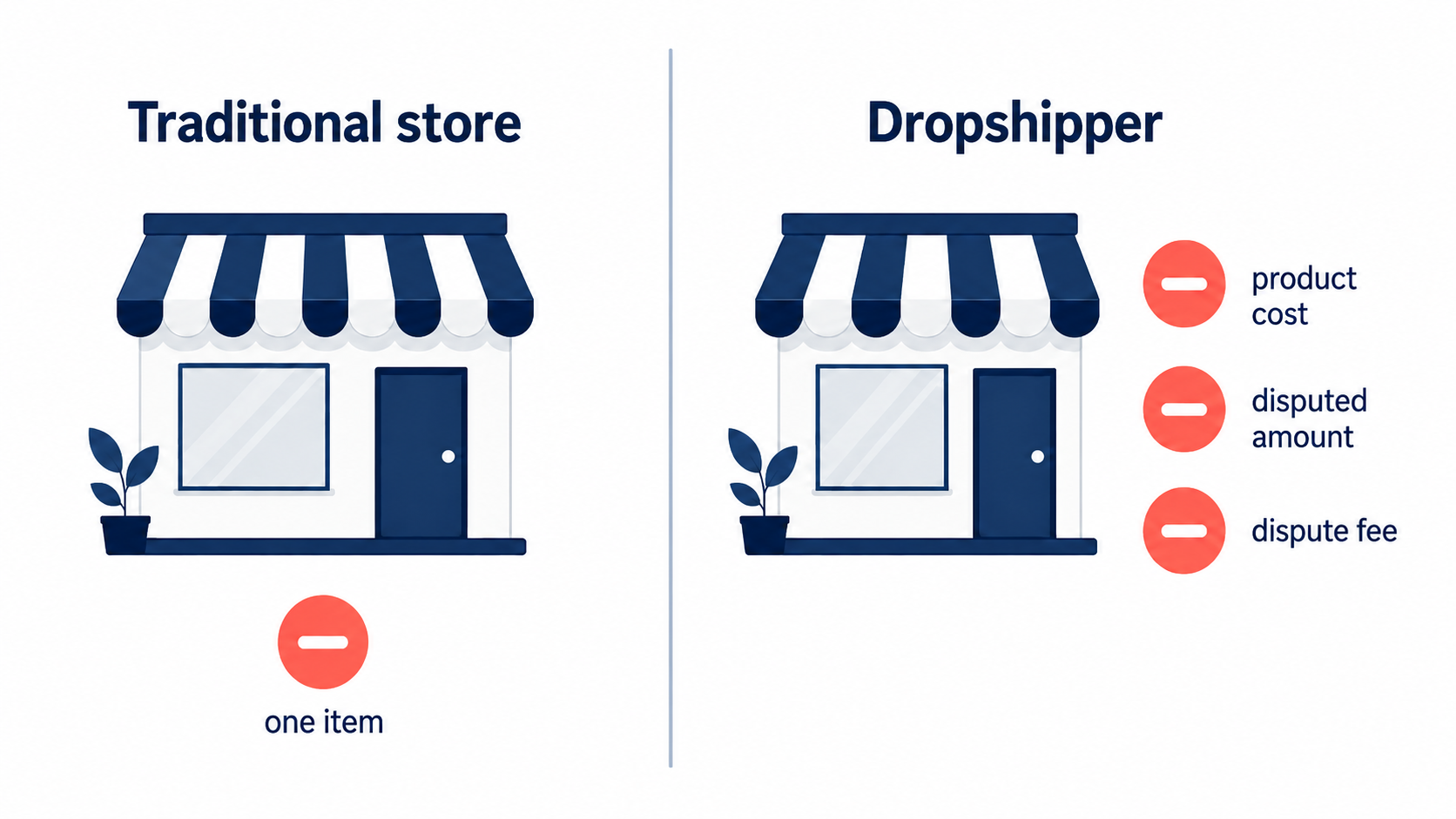
Your margins are thin to begin with. Dropshipping often runs on slim markups. A single chargeback can wipe out the profit from many legitimate orders, so even a low chargeback rate hurts disproportionately.
You don't control fulfillment or quality. Because a third party ships the product, you can't guarantee delivery speed or item quality two of the biggest chargeback triggers, and ones you can only influence indirectly.
Why Chargebacks Hurt Dropshippers More: The Numbers
The direct loss on an order is only the visible damage. The deeper threat is what chargebacks do to your ability to keep processing payments at all.
The prevention-vs-cure math is lopsided. Stopping a dispute early with prevention tools costs an estimated $20–$30 per case. Letting it reach the full chargeback stage costs $110–$450 per dispute once you factor in fees, lost goods, and labor. In the US, dispute-processing costs run even higher than the global average. Prevention isn't just safer it's an order of magnitude cheaper.
The processor danger zone is closer than you think. Once your dispute rate drifts toward 0.5%–0.75%, payment processors start imposing reserves, holding funds, or freezing accounts. For a dropshipper, frozen funds can halt your entire operation overnight.
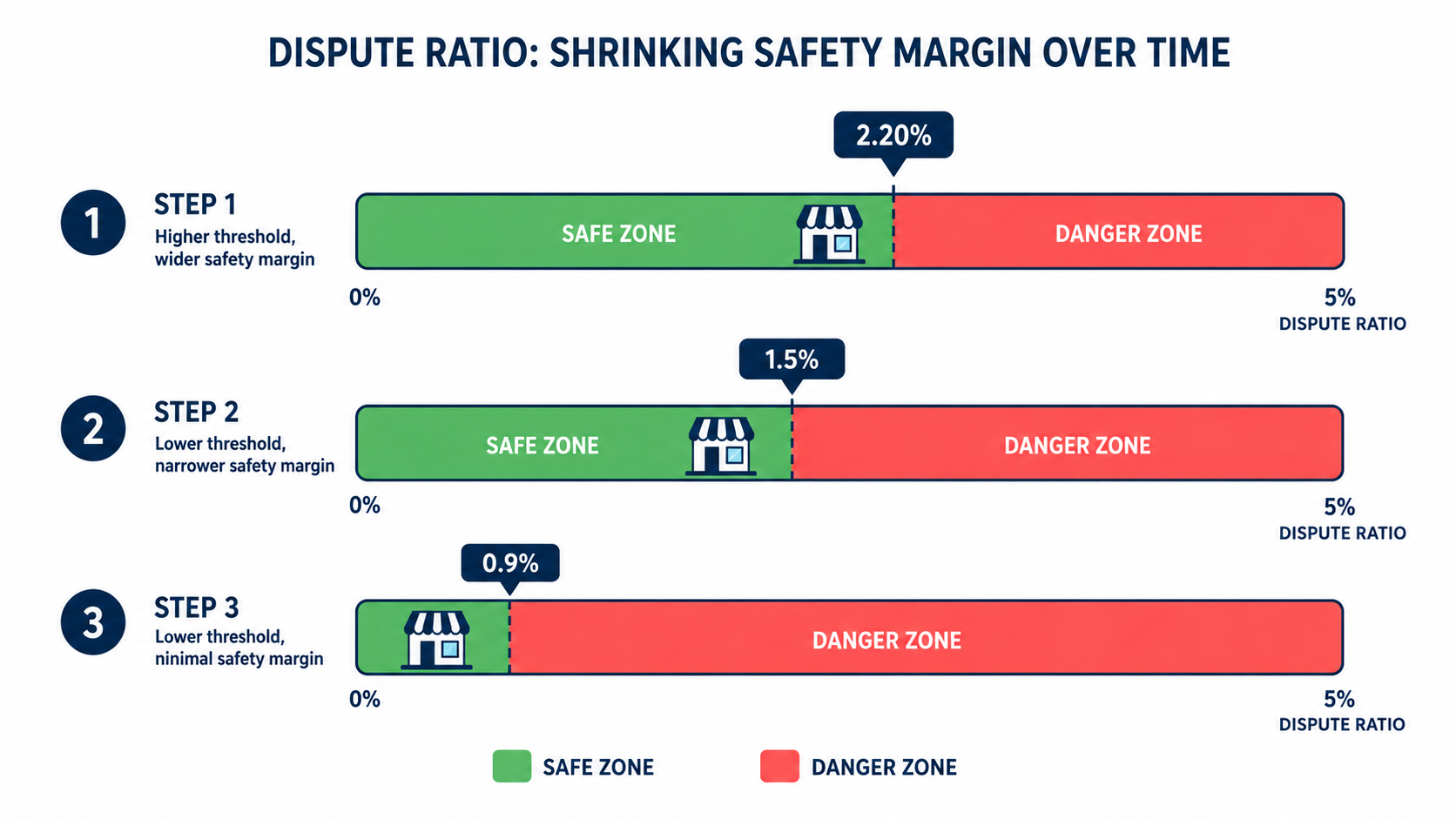
New card-network thresholds shrank your safety margin. Visa's Acquirer Monitoring Program (VAMP) stepped its "excessive" merchant threshold down to 0.9% of settled Visa transactions as of January 2026 down from 1.5% in October 2025 and 2.20% at launch in mid-2025. Crossing it can trigger per-dispute fees and remediation. Critically, the new metric also counts fraud signals that many merchants never track, so a store operating at a seemingly safe 0.4–0.6% has less cushion than it assumes.
Friendly fraud is rising fast. According to Visa's 2026 fraud report, 64% of merchants saw an increase in friendly fraud over the past year customers disputing charges for orders they actually placed. Dropshipping's longer shipping windows make this worse, because "I never got it" disputes spike when delivery takes longer than the customer expected.
The Three Main Causes of Dropshipping Chargebacks
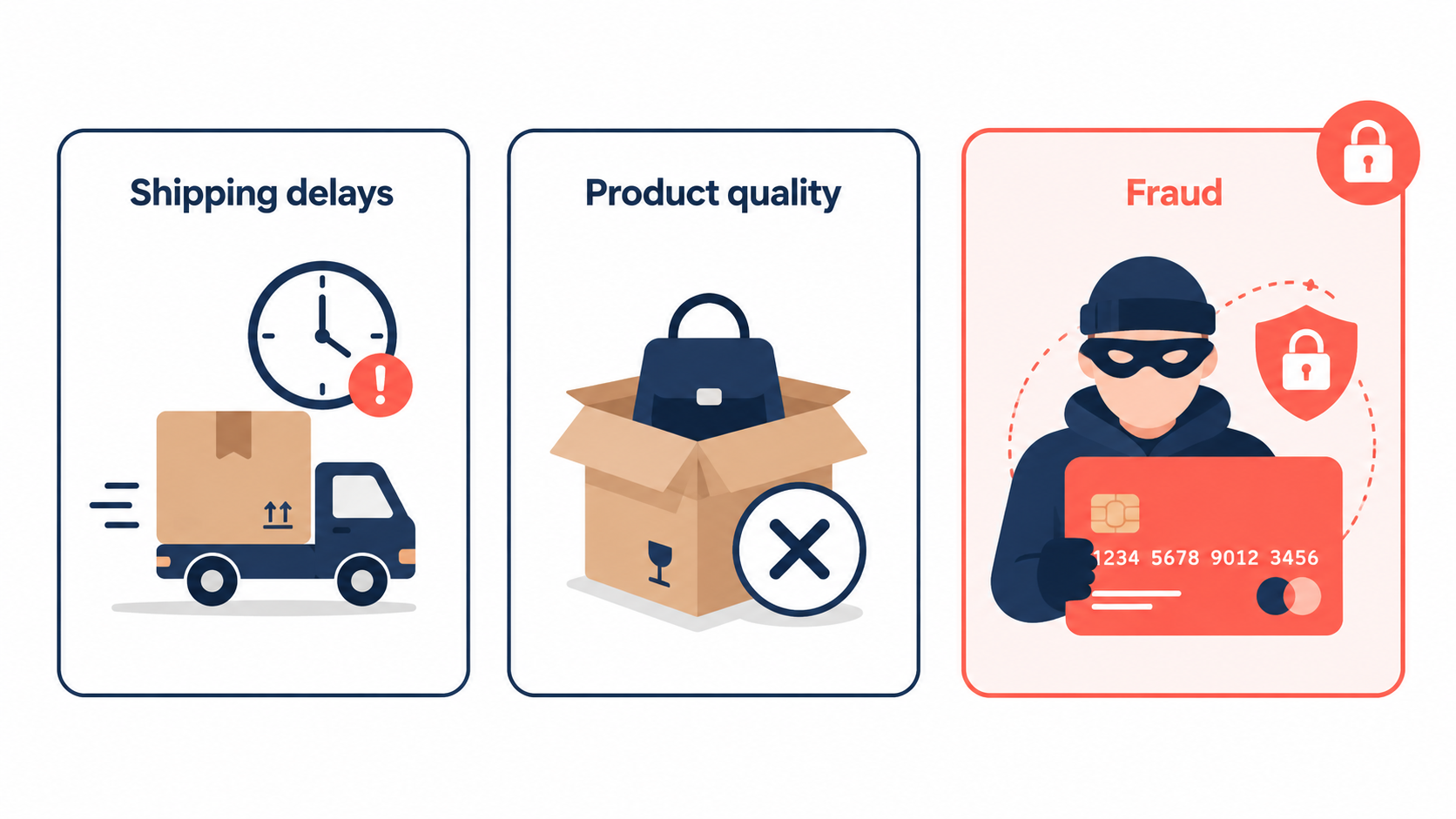
Almost every dropshipping chargeback traces back to one of three root causes. Knowing which one you're facing tells you how to fix it.
1. Shipping delays
Dropshipping often means longer or less predictable delivery times, especially with overseas suppliers. When an order takes longer than the customer expected, impatience turns into an "item not received" dispute even when the package is still on its way.
2. Product quality issues
Because you never physically handle the product, a gap between the product photos and what actually arrives is common. Industry reports attribute a large share of dropshipping disputes to quality complaints. A disappointed customer who can't easily reach you often skips straight to their bank.
3. Fraudulent transactions
This is the one you can attack most directly with technology. When someone uses a stolen card to place an order, the real cardholder later disputes the unauthorized charge and you're left covering it after already shipping. This category is pure loss, and unlike the first two, it has nothing to do with your service quality.
How to Prevent Dropshipping Chargebacks: The Playbook
Prevention beats recovery every time it's cheaper, protects your processor standing, and doesn't depend on winning a dispute after the fact. Here's the practical approach, organized by root cause.
Close the expectation gap. Most non-fraud chargebacks are really communication failures. Reduce the distance between what the customer expects and what the supplier delivers: set honest, realistic delivery windows; use clear billing descriptors so customers recognize the charge; send proactive tracking emails so they know the order is moving; and make refunds easy so they come to you instead of their bank. Clear policies and proactive communication are among the most effective ways to cut disputes.
Respond within the first 48 hours. When a customer does raise an issue, speed matters enormously a large majority of disputes are resolved before they escalate to a formal claim if you address them quickly and empathetically. A fast, human response is one of the cheapest chargeback defenses you have.
Vet your suppliers ruthlessly. Since quality and shipping speed drive so many disputes, your supplier choice is a chargeback strategy. Favor suppliers with reliable fulfillment, tracking, and consistent product quality.
Keep thorough documentation. For every order, retain tracking numbers, supplier invoices, delivery confirmations, and customer communications. Complete records substantially improve your odds if you do have to fight a dispute.
Set up a backup payment processor. Because freezes and reserves are an ever-present risk, many dropshippers run a primary processor (commonly Stripe or Shopify Payments) plus a backup, so a hold on one doesn't take the whole business offline.
Monitor your dispute ratio monthly. Given the new VAMP threshold, track your ratio against the current limits as routine hygiene don't wait for a warning from your processor.
Stop fraudulent orders before they ship. For the fraud category specifically, the most effective lever is preventing the bad order from ever being placed which brings us to the layer dropshippers most often overlook.
Attacking Fraud-Driven Chargebacks at the Source
Of the three causes, fraudulent transactions are the one you can eliminate most directly and the earlier you stop them, the more you save. A stolen-card order that never gets placed is a chargeback that never happens, with zero product cost and zero dispute fee.
This is where a tool like Browsify fits into a dropshipper's defenses. Browsify works before checkout to block the high-risk traffic behind fraudulent orders stolen-card fraud routed through proxies, VPNs, and TOR, plus bot-driven card testing using a transparent visitor risk score and thresholds you control. It recognizes repeat offenders by persistent Visitor ID even when they rotate IPs, and includes an iCloud Private Relay allow option so genuine customers aren't caught in the net. For a dropshipper, that means the fraud-driven slice of your chargebacks gets intercepted at the front door, before you've paid a supplier or shipped a thing.
To be clear about scope: Browsify targets the fraud category it won't fix a slow supplier or a misleading product photo, which you address through the expectation-gap tactics above. But for the pure-loss chargebacks that come from stolen cards and bots, stopping them before checkout is the most cost-effective defense there is.
Try Browsify free and block fraud-driven chargebacks before they ever reach your store. Browsify App
Frequently Asked Questions
Why are chargebacks worse for dropshippers than other stores? Because you pay your supplier and ship before the dispute lands, a chargeback costs you the product, the disputed amount, and a fee a triple loss and dropshipping's thin margins and longer shipping times amplify the damage.
What chargeback rate is dangerous? Once you approach roughly 0.5%–0.75%, processors commonly impose reserves or freezes. Separately, Visa's VAMP "excessive" threshold dropped to 0.9% of settled Visa transactions in January 2026, and it counts fraud signals many merchants don't track so your real buffer may be smaller than it looks.
Can I just fight chargebacks instead of preventing them? You can dispute them, but it's far more expensive and uncertain than prevention roughly $110–$450 per dispute that reaches the chargeback stage versus $20–$30 to prevent one early. Prevention also protects your processor standing, which fighting disputes does not.
How do I prevent fraudulent-order chargebacks specifically? Stop the bad order before it's placed. Blocking high-risk and anonymized traffic before checkout, screening with a risk score, and recognizing repeat offenders prevents stolen-card orders from ever shipping.
Final Thoughts
For a dropshipper, chargebacks aren't a back-office nuisance they're a direct threat to both your margins and your ability to keep accepting payments, and the 2026 tightening of card-network thresholds has only raised the stakes. The good news is that chargebacks are largely preventable when you attack them by root cause: close the expectation gap for delays and quality, respond fast when issues arise, document everything, and intercept fraudulent orders before they ship.
Get the fundamentals right and add a before-checkout layer to stop fraud at the source, and you'll protect your revenue, keep your processor happy, and build a dropshipping business that survives the tougher rules ahead.
Next in this series: "The Hidden Cost of Fraud for Low-Margin Dropshipping Stores" and "How to Keep Your Payment Processor From Freezing Your Dropshipping Account."
This article is for general educational purposes and reflects common ecommerce fraud-prevention practices; it isn't legal or financial advice. Statistics and card-network thresholds are drawn from third-party reporting and may change. Always confirm current Shopify features, card-network rules, and your payment processor's policies, as they change over time.