
Shopify Fraud Prevention: The Complete 2026 Guide for Store Owners
A complete guide to Shopify fraud prevention in 2026 the fraud types draining merchant revenue, how Shopify detects them, and a layered system to stop fraud before it becomes a chargeback.
Fraud is no longer an occasional headache for Shopify merchants it's a structural cost of doing business online, and it's growing faster than ecommerce itself. Global ecommerce fraud losses reached an estimated $48 billion in 2025 and are projected to climb toward $107 billion by 2029, driven largely by AI-powered attacks and rising friendly fraud.
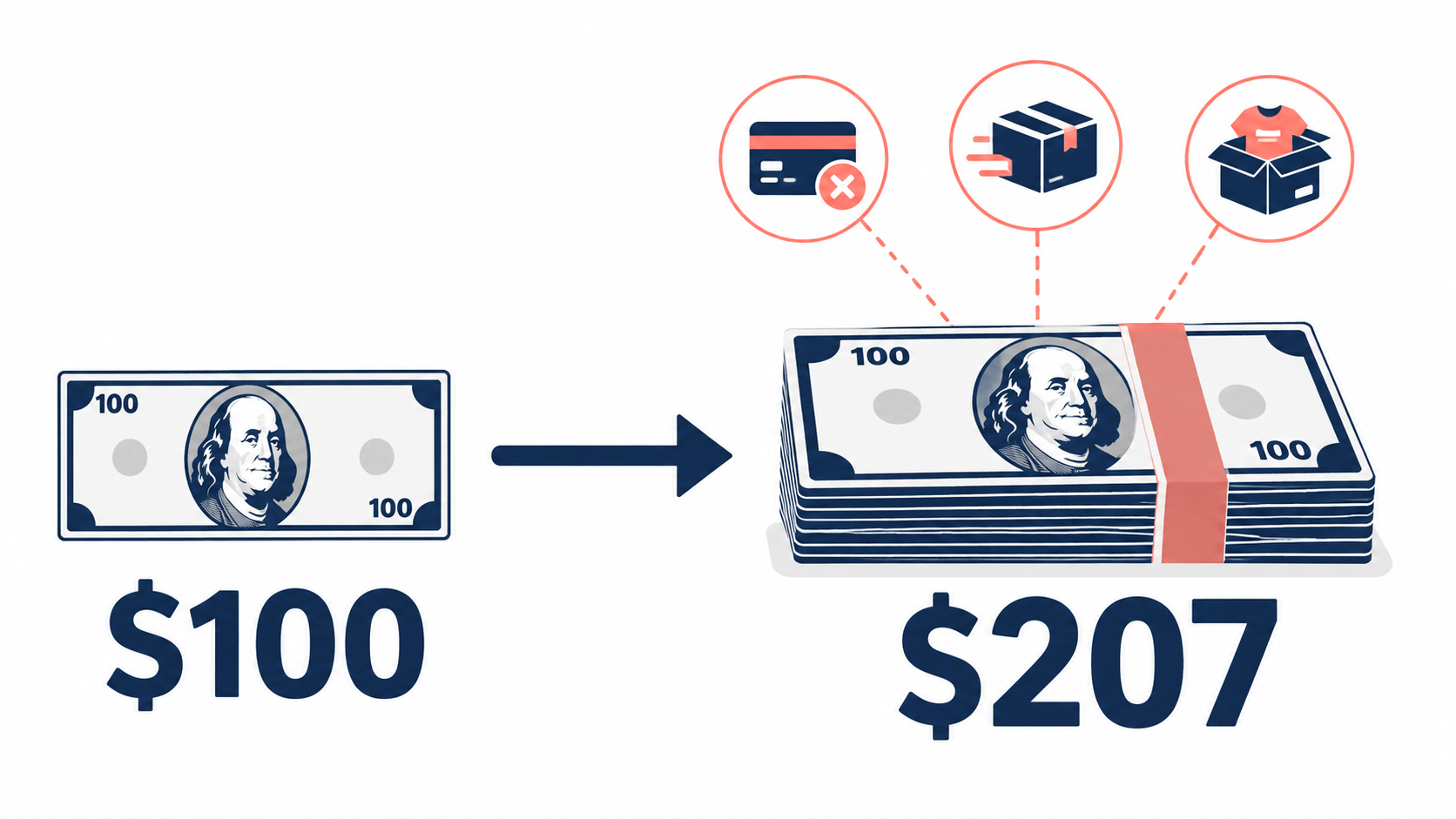
For the individual store owner, those numbers translate into something painfully concrete: for every $100 lost to fraud, merchants lose roughly $207 once you add chargeback fees, shipping, lost inventory, support time, and blocked legitimate customers. Fraud rarely costs you only the order it costs you a multiple of it.
After more than 15 years helping merchants defend their stores, I've learned that fraud prevention isn't a single setting you switch on. It's a layered system. This pillar guide walks you through the whole picture the threats, how Shopify detects them, and how to build defenses that stop fraud without scaring away real buyers. Each section links to a deeper guide where you can go further.
Why Shopify Fraud Prevention Matters More Than Ever
It's tempting to treat fraud as someone else's problem until your payment processor freezes your account. Here's why prevention deserves a place at the center of your operations:
The financial bleed is real. US merchants now lose about $4.61 for every $1 of fraud once indirect costs are counted a sharp rise over the past few years. Small and mid-size stores are common targets precisely because they often lack advanced fraud tools and the capacity for manual review.
Chargebacks are accelerating. Global chargeback volume is projected to reach 337 million by 2026, up roughly 41% from 2023 outpacing ecommerce growth. Chargeback fraud alone is expected to cost merchants in the tens of billions of dollars.
Your account stability is on the line. Fulfilling high-risk orders leads to chargebacks, and too many chargebacks can result in payment processing being disabled and removal from Shopify Payments. Once your dispute ratio drifts into the danger zone, reserves, fund holds, and shutdowns become real possibilities.
Over-blocking is also expensive. This cuts both ways. Overly strict rules can decline 5–10% of legitimate orders, and false declines cost retailers globally far more than actual fraud does. The goal is never to block everything it's to block the right things.
The Main Types of Shopify Fraud (and How to Recognize Them)
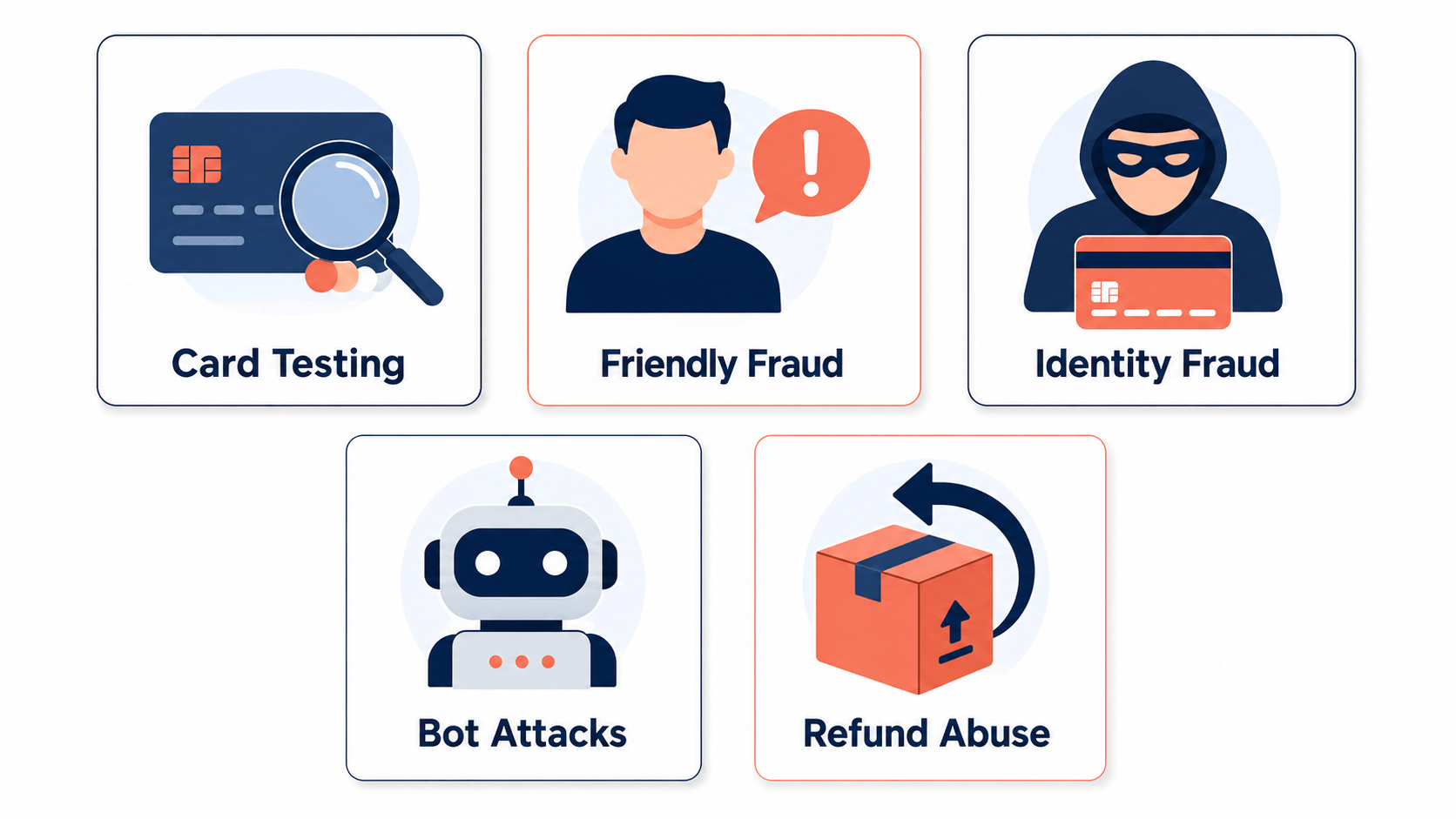
You can't defend against threats you don't understand. These are the fraud vectors every Shopify merchant should know.
Card Testing Fraud
Fraudsters obtain stolen card numbers from data breaches or dark-web marketplaces, then run small or rapid transactions on your store to find which cards still work. You'll often see bursts of failed payment attempts and multiple card tries in a short window. It's frequently automated by bots, and it can quietly wreck your authorization rates. → Deep dive: "Card Testing Fraud on Shopify: How to Detect and Block It Fast"
Friendly Fraud (First-Party Fraud)
This is the hardest to catch because the customer's information is genuine a real buyer disputes a charge for an order they actually placed, claiming it never arrived or was unauthorized. It's now one of the dominant fraud types, and a majority of merchants report it rising year over year. → Deep dive: "Friendly Fraud Explained: Why Real Customers Dispute Real Orders"
Stolen Card / Identity Fraud
A fraudster uses someone else's card to place an order, often shipping to an address different from the billing address. The genuine cardholder later disputes the charge, and you're left covering the loss after already shipping the goods.
Bot Attacks
Automated scripts test stolen credentials, scrape your pricing and content, hoard inventory, or place fraudulent orders at scale. Bots are the engine behind much of the fraud above stopping them upstream prevents many downstream problems.
Refund and Policy Abuse
Customers exploit lenient policies claiming items were defective when they weren't, returning used or different items, or abusing promo codes. Recent reports show refund and policy abuse rising sharply as an attack type.
Understanding these categories is the foundation. The rest of this guide is about detecting and stopping them.
How Shopify's Built-In Fraud Detection Works
Shopify gives every merchant a baseline of protection, and you should know exactly what it does and doesn't do.
Fraud analysis runs automatically. Shopify reviews every online credit card order it can verify and assigns a fraud recommendation of low, medium, or high risk. Medium and high-risk orders are flagged on your Orders page with a warning symbol next to the order number.
Recommendations vs. indicators. The recommendation tells you how likely an order is to be fraudulent. The indicators shown as green, red, and grey icons explain why, covering things like AVS (address verification) checks, CVV results, IP address details, and whether multiple cards were attempted. Use the recommendation to gauge risk and the indicators to investigate.
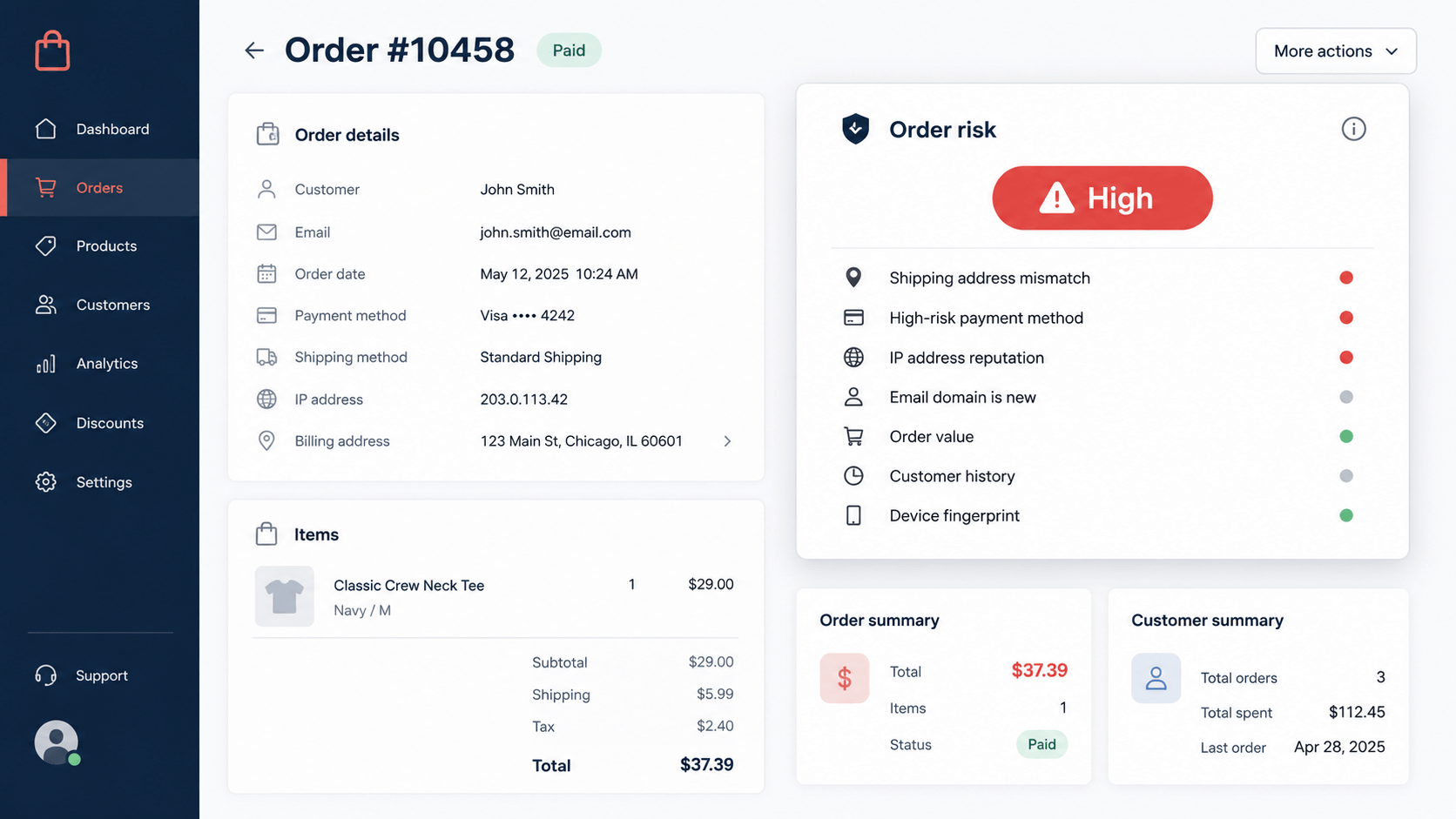
It's powered by machine learning trained on historical transactions across millions of Shopify stores, and the models are continuously refined.
Its limits matter. Fraud analysis only works on online credit card orders Shopify can verify offline orders and some third-party gateways may get no recommendation at all. It also flags orders but does not cancel them; that decision stays with you. And it's intentionally general, which is why serious operations layer additional protection on top. → Deep dive: "How to Read Shopify's Fraud Analysis: Every Indicator Explained"
A Layered Fraud Prevention Strategy
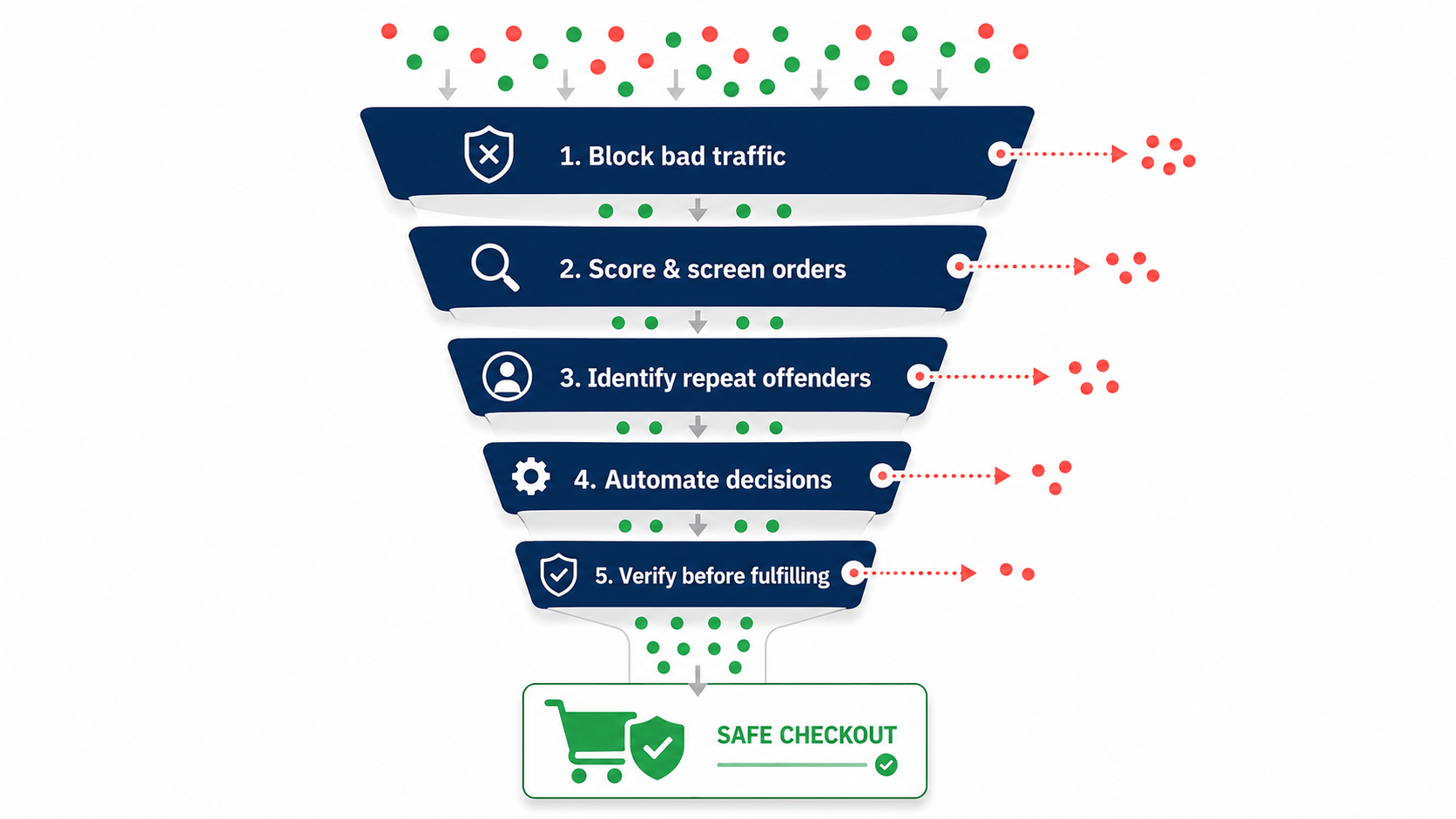
No single tool stops everything. The merchants who keep fraud and chargebacks under control build defenses in layers, each catching what the previous one missed.
Layer 1: Block bad traffic before it reaches checkout
The cheapest fraud to stop is the order that never gets placed. Detecting and blocking high-risk visitors upstream those using proxies, commercial VPNs, or TOR to hide their location, or showing bot-like behavior removes a major fraud vector before it can cost you anything. The key is doing this without blocking legitimate privacy-conscious customers (for example, by allowing Apple's iCloud Private Relay). → Deep dives: "Proxy, VPN, and TOR: How Fraudsters Hide and How to Block Them" and "What Is an IP Address and Why It Matters for Store Security"
Layer 2: Score and screen every order
Risk scoring assigns each visitor or order a number based on signals like IP reputation, anonymizing-tool use, device characteristics, and behavioral patterns. This lets you treat a clearly safe order differently from a clearly risky one automatically. → Deep dive: "Understanding Risk Scores: How Fraud Detection Actually Works"
Layer 3: Identify repeat offenders
IP addresses change constantly, but assigning a persistent visitor identifier (a kind of browser fingerprint) lets you recognize and block a repeat offender even if they switch IPs or devices. This is what stops the same fraudster from simply trying again. → Deep dive: "Browser Fingerprinting and Visitor ID: Tracking Repeat Offenders"
Layer 4: Automate the obvious decisions
Reviewing every flagged order by hand doesn't scale. You can automate fraud handling holding, tagging, or cancelling orders that meet high-risk criteria using Shopify Flow or a dedicated app so your attention goes only to the genuine edge cases. → Deep dive: "How to Automate Fraud Prevention on Shopify (Without Blocking Real Customers)"
Layer 5: Verify before you fulfill
For the orders that remain ambiguous, manual payment capture buys you time to investigate before charging the card. Contact the customer; genuine buyers verify, fraudsters usually go silent. When you can't confirm legitimacy, cancel and refund it's far cheaper than a chargeback. → Deep dive: "High-Risk Orders on Shopify: How to Spot and Stop Fraud"
Protecting More Than Just Orders: Content and Data
Fraud prevention isn't only about payments. Competitors and scrapers also target your store's content product descriptions, images, and pricing logic to clone your work or undercut you. Tools that deter casual scraping (blocking right-click, developer tools, and copy actions) add another layer of protection for stores whose catalog is a competitive asset. Use them judiciously, since they can affect the experience for legitimate users. → Deep dive: "How to Stop Content Scraping and Protect Your Product Pages"
Balancing Security and Customer Experience

The single biggest mistake I see merchants make after they get serious about fraud is overcorrecting. Remember: false declines cost retailers far more than fraud itself. A first-time buyer placing a large order while travelling abroad on a VPN can look identical to a fraudster but they're a real customer about to be turned away, along with their lifetime value.
The art of fraud prevention is calibration. Set thresholds to your store's actual risk profile, review the patterns in your flagged orders, and tighten or loosen as you learn. Aim to review the right orders efficiently rather than block everything that looks slightly unusual. → Deep dive: "Best Practices for Setting Fraud Thresholds to Avoid False Declines"
Frequently Asked Questions
Does Shopify prevent fraud automatically? Shopify automatically analyzes and flags risky orders, but it doesn't block or cancel them for you, and its analysis is intentionally general. You decide how to act, and most growing stores layer additional protection on top.
What's the difference between a high-risk order and a chargeback? A high-risk order is a prediction that an order may be fraudulent. A chargeback is what happens after when a cardholder disputes a charge and the issuing bank reverses the funds. Good prevention stops high-risk orders before they become chargebacks.
Are dropshipping stores at higher risk? Yes. Dropshippers pay suppliers upfront, often have longer shipping windows that fuel friendly fraud, and operate on thin margins where even one chargeback hurts. Fraud prevention is especially critical for them.
Can fraud prevention hurt my sales? It can, if overdone. Overly strict rules decline legitimate orders, and false declines are costly. The goal is balanced calibration, not maximum blocking.
Bringing It All Together
Shopify fraud prevention in 2026 isn't a single feature it's a layered system: block bad traffic upstream, score and screen orders, recognize repeat offenders, automate the clear-cut cases, and verify the rest before you fulfill. Layer those defenses, keep your thresholds calibrated to real customers, and fraud shifts from a recurring threat into a managed, predictable cost.
Start with the deep-dive guides linked throughout this article, work through them one layer at a time, and you'll build a store that's resilient against modern ecommerce fraud without sacrificing the experience that keeps genuine customers coming back.
This article is for general educational purposes and reflects common ecommerce fraud-prevention practices; it isn't legal or financial advice. Statistics are drawn from third-party industry reporting and may vary by source and methodology. Always confirm current Shopify features and your payment processor's policies, as they change over time.
Related Guides
- Stop Fake Orders on Shopify The complete guide to identifying and blocking fraudulent orders.
- Chargeback Protection How to prevent chargebacks and protect your dispute ratio.
- Visitor ID & Browser Fingerprinting How Visitor ID works and why it's more reliable than IP blocking.
- VPN & Proxy Blocking How to block fraud traffic from anonymizing services without losing real customers.
- Fraud Risk Scores How fraud detection turns dozens of signals into one 0–100 score.
- Automatic Fraud Blocking Set up rules that protect your store 24/7 without manual review.